
"second stage"
4000 article(s) found

Coffee is not only bitter, coffee sweet source, coffee sweet and roast related
Professional coffee knowledge exchange More coffee bean information Please pay attention to coffee workshop (Weixin Official Accounts cafe_style) Coffee must be bitter! Such a conclusion. It still appeared in many people's minds. Let me tell you something, coffee is sweet! Bitter coffee? It's in the past tense. Now specialty coffee and consumers want to taste the natural sweetness of coffee in coffee
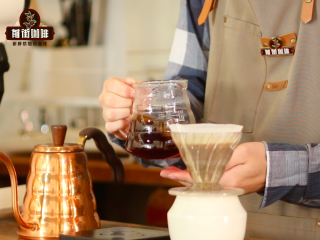
Columbia Coffee Bean hand-brewing and Baking parameters Story description of three-stage brewing flavor and taste of Huilan coffee
Following Cafe Review (Wechat official account vdailycom) found that Beautiful Cafe opened a small shop of its own Colombia is the northwestern country in South America, it is one of the three largest coffee producers in the world. Colombia gained its independence from Spanish colonial rule on July 20, 1810. Population 4

What is baking dehydration? What is the effect of baking dehydration time on beans?
Professional coffee knowledge exchange more coffee bean information Please pay attention to the coffee workshop (Wechat official account cafe_style) in roasting will often hear a word: dehydration. Coffee beans smell like raw grass before they are roasted, and some dried raw beans even have a bad smell of fermentation! At this time, raw coffee beans generally contain about 10% water, when baked.

Explanation of three-stage water injection | timing of water injection for hand-brewed coffee
Professional coffee knowledge exchange more coffee bean information please follow the coffee workshop (Wechat official account cafe_style) when is the timing of this water injection, how should three-stage water injection? Also, is the steaming time calculated from the beginning of water injection, or is it timed after water injection? First of all, the editor first explains: the demonstration and suggested parameters of the editor are all from water injection.

Brazil is the largest coffee producer in the world, Minas Gerais, a coffee bean region with Brazilian flavor.
The global trend of modern coffee has gone through three popular stages: the first stage is the popularity of cheap coffee represented by instant coffee from the post-World War II to the 1960s; the second stage is the popularity of commercial coffee represented by Starbucks from the 1960s to the beginning of this century; the third stage is the popularity of boutique coffee, which originated in the 1970s and has become a trend in the past decade.
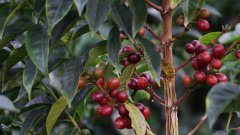
Cultivation conditions in Nicaragua SHG grade the most classic flavor of traditional coffee varieties
The global trend of modern coffee has gone through three popular stages: the first stage is the popularity of cheap coffee represented by instant coffee from the post-World War II to the 1960s; the second stage is the popularity of commercial coffee represented by Starbucks from the 1960s to the beginning of this century; the third stage is the popularity of boutique coffee, which originated in the 1970s and has become a trend in the past decade.

After 10 years of rapid development, domestic coffee has entered the fourth stage-boutique time.
The first stage: Nestl é starts its day with a good day, influencing and transforming the way of life of Chinese people, so that more people can try and accept coffee. The second stage: Shangdao Cafe, advocating freshly ground coffee to make more people accept the original coffee, and expanding all over China with its chain business model. Shangdao Cafe opened more than 2600 coffee in mainland China at this stage.

Know the basics of hand-brewed coffee | what utensils are needed to make hand-made coffee?
Professional coffee knowledge exchange more coffee bean information please follow the coffee workshop (Wechat official account cafe_style) about the folding of hand-flushing filter paper; there are two common types of strainer cups (single-hole and three-hole) today we choose single-hole as the explanation; 1. Folding filter paper: take out a fan-shaped filter paper, one side of which is pressed by the machine, and its edge is thicker. Choice of filter paper: filter
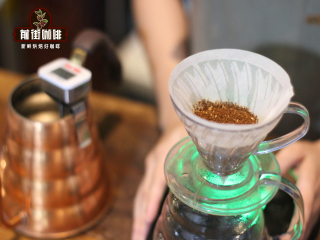
What is the gouache ratio of hand-made coffee? A course on the proportion of water injection in each stage of hand-brewed coffee
Today, let's teach you how to calculate the gouache ratio, which is a very important parameter, which determines the concentration of this cup of coffee, the thickness of flavor, and so on. There are two processes in hand brewing coffee: steaming and extraction. There are two algorithms for steaming: the first one is calculated according to the amount of powder: 1.5 times the amount of powder.
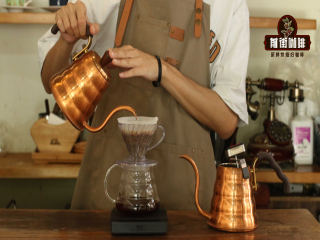
Why do you use different temperatures for hand-brewed coffee? Introduction to the technical characteristics of variable temperature cooking method
A few days ago, the world-class coffee brewing competition ended successfully, and Qianjie found that many contestants used variable temperature brewing methods on the field. At this time, some people may wonder, obviously the same coffee bean with the same method, only change the water temperature, coffee flavor will have such a change? Today, Qianjie will take you to play a little bit and change the temperature to cook.
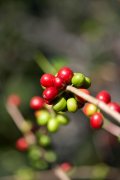
Mexican Coffee Mexico Coffee is a big producer of machine coffee in the Vivetenango region of Guatemala.
The global trend of modern coffee has gone through three popular stages: the first stage is the popularity of cheap coffee represented by instant coffee from the post-World War II to the 1960s; the second stage is the popularity of commercial coffee represented by Starbucks from the 1960s to the beginning of this century; the third stage is the popularity of boutique coffee, which originated in the 1970s and has become a trend in the past decade.

Value chain Analysis of Kenyan Coffee < Part 1 >
1. Background Coffee is one of the most important agricultural products in international commodity trade. Historically, as early as the 1990s, coffee was the second largest internationally traded commodity after oil. However, due to the imbalance between coffee production, production and sales at different stages, the coffee industry has been in crisis more or less over the past decade. As a

How do you usually drink hand-brewed coffee? the purpose of the three-stage style of hand-brewed coffee is for better extraction.
Professional coffee knowledge exchange more coffee bean information please follow the coffee workshop (Wechat official account cafe_style) front street-hand brewing coffee tutorial [brewing scheme] Select beans: new Luo Miqi use filter cup: LILY flat bottom filter cup grind: dittingkr804 grinding 7 powder: 18g powder 1:13 powder water ratio water injection: three stages of water injection, the first stage with 92 degrees hot water 4

Understanding the steps of hand-brewing Coffee improving the quality of hand-brewing in three stages
Professional coffee knowledge exchange more coffee bean information please follow the coffee workshop (Wechat official account cafe_style) about trickle coffee, mastering the ability to control coffee extraction is one of the best and trickiest things. Among them, there are many variable factors that need to be considered: the grinding thickness of coffee powder, the ratio of water to powder, water temperature and so on. But as long as you operate it correctly, you can also

Roasting process of coffee beans and matters needing attention
Among the many factors affecting the taste and flavor of coffee, roasting is the most important link. And baking itself is both a science and an art. During the roasting process of 8-20 minutes, raw coffee beans (Green coffee been) produce a series of complex changes: from the appearance, the coffee beans gradually change from light green to light yellow, light brown, brown, dark brown, such as

The roasting degree of coffee beans
Coffee beans have a history of roasting beans for hundreds of years. Without these scientific tools, how to judge the whole exothermic reaction of western heat? To put it simply, the baking process is judged by changes in appearance and temperature. The whole baking process can be divided into four stages: 1. Steaming stage: 00-10min; lower bean-140C; this is the most important process of endothermic reaction of coffee beans.
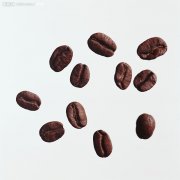
Effect of Coffee extraction and stirring on Coffee
In my opinion, making coffee is a very small thing, and it's always fun to forget the form and try new ways. The way of stirring and cooking is simple, common and cool. The main results are as follows: 1, in the steaming stage, the amount of water is the standard of direct water injection, while in the later stage, the amount of water is 50 grams (corresponding to 20 grams of powder).

What on earth is coffee extraction? How is espresso extracted? What is the rate of extraction?
Professional coffee knowledge exchange more coffee bean information please follow coffee workshop (Wechat official account cafe_style) Coffee extraction _ Italian Coffee extraction Standard _ Coffee extraction principle Coffee extraction method what is coffee extraction? What happened during the extraction process? With regard to coffee extraction, there is still a lot that we have not fully understood. Today, I'm going to spend the past few weeks

You're welcome-if cherry powder is sweet, how to drink coffee powder?
You're welcome-if cherry powder is sweet, how to drink coffee powder? Use beans: Kenya AA Top Muya is a recent favorite of Kenya. if you make it well, the sweet feeling of cranberry acid + tangerine is very distinct, change your impression that Kenya is sour, use a filter cup: be polite-if cherry powder is more polite than Hario v60, which enhances aroma and acidity, the flow rate is slightly slower but with fruit.

Baking common sense coffee bean baking process and matters needing attention
Among the many factors affecting the taste and flavor of coffee, roasting is the most important link. And baking itself is both a science and an art. During the roasting process of 8-20 minutes, raw coffee beans (Green coffee been) produce a series of complex changes: from the appearance, the coffee beans gradually change from light green to light yellow, light brown, brown, dark brown, such as